Enterprise GTM teams run on AI. Positioning still lives in decks. MessageWorks is one platform for governed positioning, AI content, and pre-launch validation, so every team ships on the same story.

Off-message assets shipping when positioning is codified vs. industry baseline
Fewer off-message escalations on global, multi-product launches
Increase in sales-accepted leads from sharper message-to-ICP fit
Pre-launch message validation, down from 4–6 weeks (traditional)
Each business unit picks its own AI tools. Regional teams localize on their own. Reviewers see drafts only at the end. The result is a portfolio of messaging that no single CMO or PMM leader can fully see, much less keep on-strategy. Drift compounds with every campaign that ships.
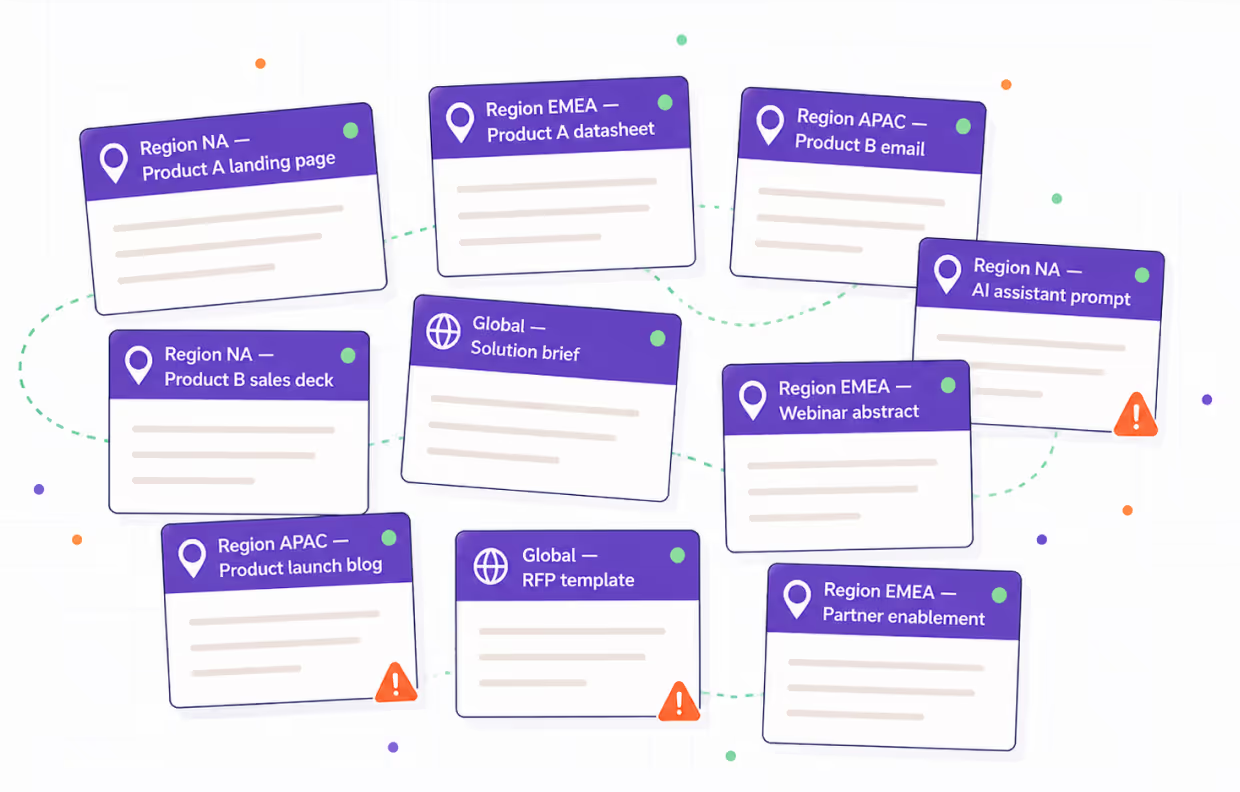

Different teams on different AI stacks produce different versions of the same story.
By the time drafts reach brand, PMM, and leadership, every change is expensive.
New positioning takes quarters to roll out, while every region keeps shipping the previous version.
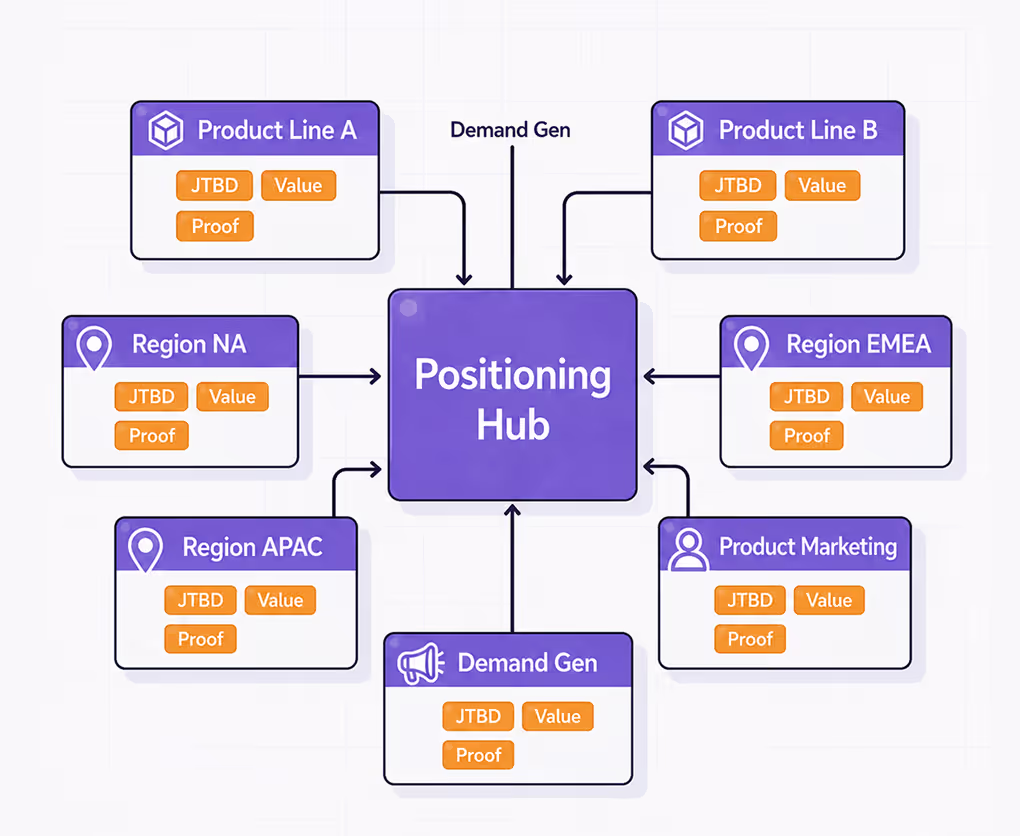
MessageWorks consolidates corporate, solution, and regional messaging in one structured hub. Teams generate AI content from the hub, with guardrails enforced inline and synthetic audiences validating launches before global rollout.

Approved positioning for every product line, segment, and region in one structured hub. Brand, PMM, and corporate marketing share the canonical narrative the rest of the org pulls from.

Approved messaging, brand rules, and compliance constraints check every AI-generated draft inside the workflow. Off-message language and unsupported claims surface before they reach the market.

Pressure-test important launches against synthetic audiences grounded in your real segments and personas. CMOs and PMM leaders see how a story will land before global rollout, then refine with the read in hand.
Encode the narrative for each audience once. Generate on-message content across the portfolio. Validate every launch before it ships.
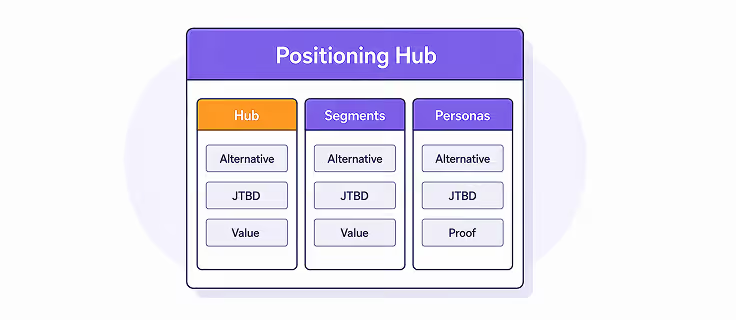
Corporate, solution, and regional messaging gets structured into a hub the team actually works from. PMM defines the story once, in a form every region and downstream workflow can pull from.
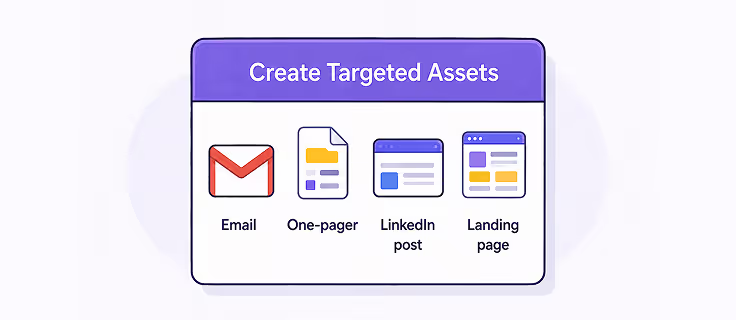
Drafts start grounded in approved positioning instead of blank prompts. Regional and product marketing teams generate localized assets at the volume the calendar demands, while staying inside the messaging the executive team agreed on.


Synthetic audiences read every important asset against the segments, regions, and personas you encoded upstream. CMOs and PMM leaders see how the story is likely to land before a global launch goes live, then refine with the evidence in hand.

A positioning operations platform treats your narrative as operational infrastructure: a living system that captures company-, segment-, and persona-level messaging in one governed place and makes it reusable downstream. Unlike standalone docs, it’s designed to enforce a Unified Positioning OS across teams - so launches, campaigns, and sales assets start from the same canonical story and reduce drift, rework, and opinion-driven debates.
Messaging stays healthy when there’s a clear owner of the canonical narrative and a repeatable way to evolve it as products, markets, and segments change. MessageWorks is built around a governed Positioning Intelligence Hub - supporting the work of formalizing and governing messaging & positioning architecture - so updates are made to one source of truth that downstream teams can reliably reuse, rather than chasing the “latest deck.”
Create a single source of truth by structuring messaging as a hierarchy - core positioning that rolls down into industry-, tier-, and buying-role narratives - so teams can tailor without reinventing or contradicting the main story. MessageWorks is designed for this ABM reality: a Positioning Intelligence Hub that organizes narratives by industry and buyer persona, supporting the objective of formalizing and governing messaging & positioning architecture while keeping outreach aligned within a Unified Positioning OS.
MessageWorks prevents drift by anchoring all content work to a Positioning Intelligence Hub - a governed, hierarchical messaging architecture that defines what you say by segment and persona, with canonical language and constraints. This matters because as contributors multiply, teams otherwise default to improvising from scattered decks and “gut feel.”
Yes - MessageWorks’ AI-Powered Content Generation produces channel-ready drafts (web, email, LinkedIn, etc.) that are grounded in your Unified Positioning OS: segment/persona narratives, value propositions, objections, and proof points. This matters because non-experts and distributed teams typically generate fast but off-strategy copy that senior PMMs or strategists must rewrite. The primary outcome is higher-throughput content creation where experts refine and approve instead of reconstructing the narrative from scratch.
MessageWorks supports ABM teams by organizing messaging by industry and buying role in a governed hub, then using persona-specific content generation to turn those narratives into role-targeted drafts for web, email sequences, and sales assets. This matters because buying committees (e.g., CIO vs. CISO vs. LoB leaders) require different value framing, and teams often waste weeks reinventing it per account. The primary outcome is faster creation of tailored assets that still ladder up to one coherent ABM narrative.
Yes - MessageWorks is designed to support the objective of translating product capabilities into aligned, persona-specific value propositions. Using the Positioning Intelligence Hub as a governed “Unified Positioning OS,” teams can structure how capabilities roll up into role- and persona-specific outcomes, benefits, and proof points so product, marketing, demand gen, and sales start from the same canonical story and avoid drift.
Synthetic Audiences in MessageWorks are a way to predict how a defined buyer segment or persona is likely to respond to a message—by using large language models as expert forecasters of audience response, not as role-playing “pretend buyers.” Instead of producing a single opinion, Synthetic Audiences model distributions of reactions across a realistic audience, preserving disagreement, confusion, and partial resonance. They exist to give teams structured, repeatable, persona-grounded insight before messages reach real customers, where waiting for post-launch data is slow or impractical.
MessageWorks supports pre-launch message testing through Content Testing with AI-Generated Synthetic Focus Groups, aligning directly to the objective of de-risking and optimizing content before it reaches real audiences. Draft assets can be evaluated against your canonical messaging architecture in the Positioning Intelligence Hub and then stress-tested with synthetic persona reactions, producing prioritized recommendations to improve clarity, relevance, and persuasiveness before launch decisions are locked.
MessageWorks is designed to return prioritized, actionable edit recommendations - not just general commentary - by combining Content Testing with AI-Generated Synthetic Focus Groups and alignment checks against your governed messaging in the Positioning Intelligence Hub. Instead of “sounds good” feedback, teams get specific likely failure points (confusion, weak persuasion, off-target claims) tied to defined buyer roles and value propositions, helping ABM teams refine plays before they reach target accounts.
MessageWorks reduces over-promising and conflicting messages by anchoring ABM assets to a governed positioning architecture in the Positioning Intelligence Hub and automatically checking drafts for alignment and drift - supporting the need to translate capabilities into accurate, persona-specific value propositions. For strategic accounts, this helps ensure outreach and enablement reflect what product actually delivers, so teams don’t improvise claims under pressure and executives can point to a clear, documented rationale.
Because MessageWorks combines a Unified Positioning OS, On-Brand Content at Scale, and Evidence-Led Message Optimization in one system, ROI is typically framed as fewer rewrites and review cycles, faster launch/campaign execution, and less reliance on one-off consultant artifacts or slow research. It matters because it supports a clearer decision on “what we say, to whom, and why,” while improving confidence before high-stakes messaging goes live.
Use this system when you need positioning to behave like operating infrastructure - codified in a Positioning Intelligence Hub and continuously reused for content generation and pre-launch testing - rather than a static deck or isolated copy project. It matters when launches, segments, or buying roles are multiplying and teams risk messaging drift, because the primary outcome is sustained alignment on canonical narratives across product, marketing, and sales.
Generic AI copy tools treat each draft as an isolated prompt, which often leads to inconsistent, “me-too” output when teams can’t provide full strategic context. This system is built around a Unified Positioning OS (via the Positioning Intelligence Hub) that encodes segment/persona value propositions and then powers AI-Powered Content Generation and Synthetic Focus Groups from the same governed source - so drafts can be generated and stress-tested against the official narrative.
See how MessageWorks gives enterprise CMOs and PMM leaders a governed source of truth, audience-specific AI content at scale, and pre-launch resonance evidence on the launches that matter.


.svg)
