AI made content faster. It also made it harder to keep each client on-message. MessageWorks is the layer between every client's positioning and the AI-generated content shipping across your portfolio of accounts.

Faster ramp on new client engagements and new contributor handoffs
Output per writer on each client account
Per-client positioning reuse vs. ~20% industry baseline
Strategists know each client's market, ICP, and value props deeply. That knowledge lives in partner heads, old workshop decks, and Slack threads, not in anything a writer or AI tool can pull from. Drafts come back close to right, but never quite how the client talks.
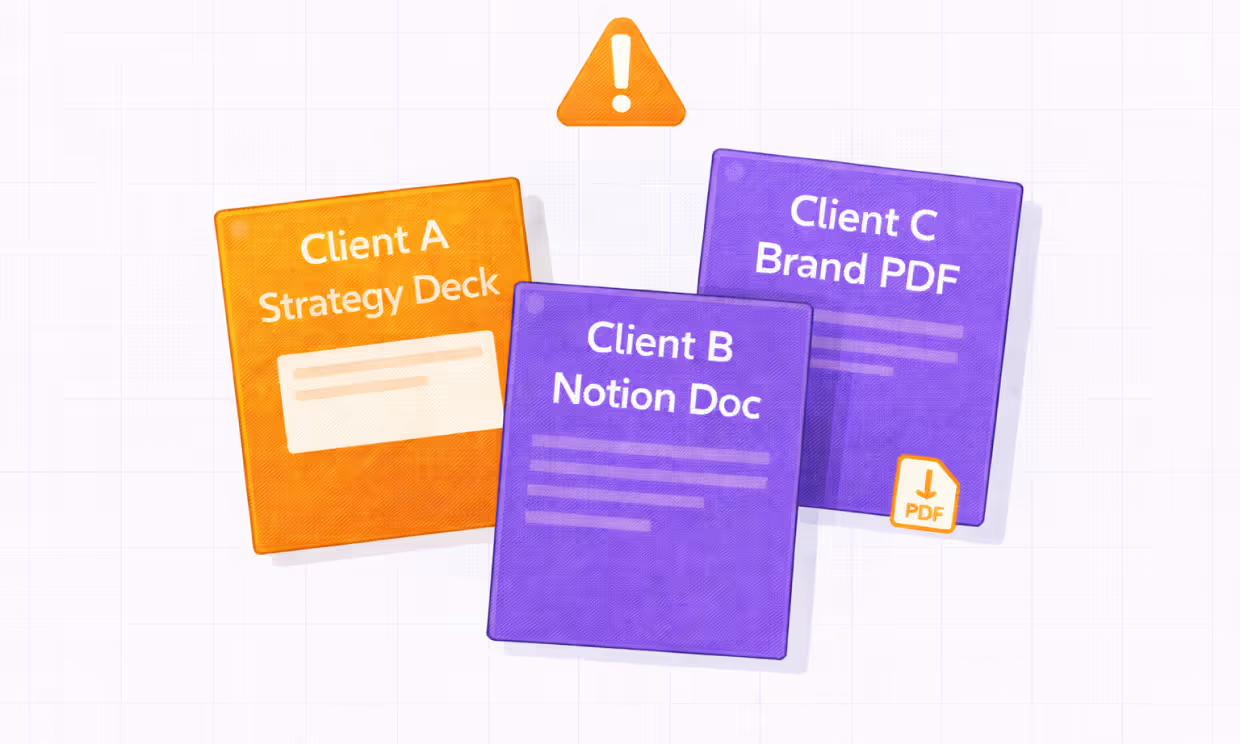

Each client's positioning lives across files, partner heads, and threads, not in a structured hub the team can pull from.
Writers prompt against the model's defaults, not against the client's positioning. Drift compounds across writers, freelancers, and accounts.
Drafts come back good but not how the client talks. Strategists and partners pull copy back into client positioning, again and again.
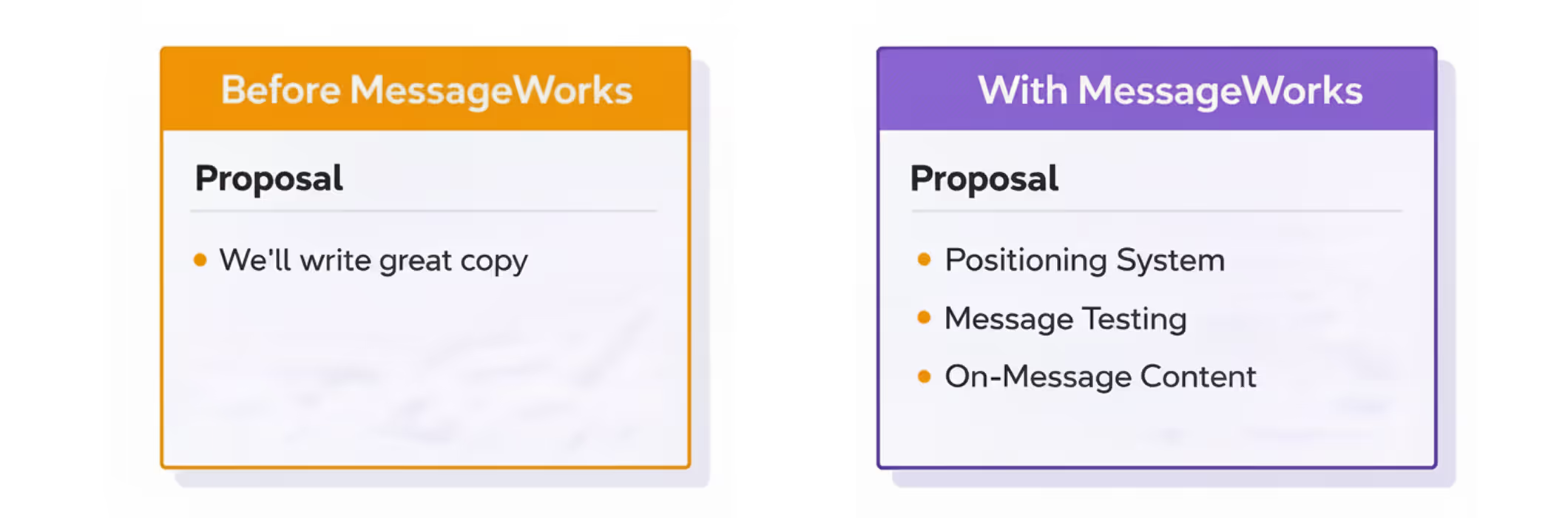
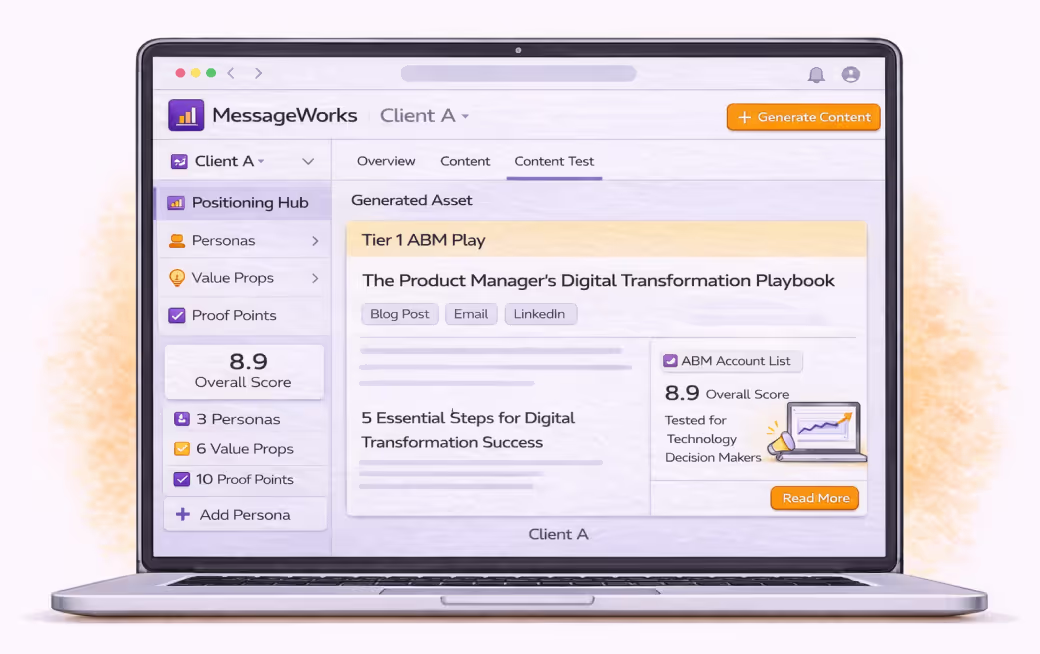
MessageWorks gives agencies a per-client positioning hub, on-message AI generation grounded in that hub, and pre-launch resonance evidence on the launches that matter to the client.

Stand up a structured hub per client account. Encode segments, value props, voice, and proof once, and pull from them on every draft.

Every draft, from every contributor, generates from the client's hub. Guardrails on every AI-generated asset before it reaches the strategist.

Pressure-test hero campaigns and narrative pivots with synthetic audiences in seconds. Present the read to the client as a deliverable.
Encode each client's positioning into a structured hub. Generate on-message drafts at agency scale, pulling from that hub on every prompt. Pressure-test the launches that matter before the client commits the spend.
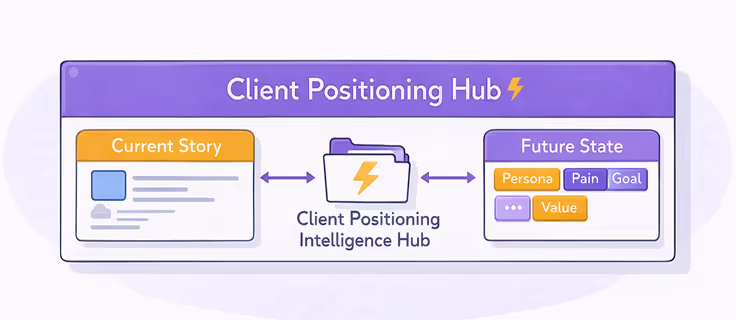
Stand up a per-client hub. Capture segments, ICP, value pillars, proof points, and voice in a structured format the team and the AI tools can both pull from. Repeat the format for every client engagement.

AI generation grounded in the client's hub. Strategists, copywriters, and freelancers all draft from the same source of truth. Drafts come back closer to ship-ready and further from the model's defaults.


Run synthetic-audience reads on hero campaigns, narrative pivots, and big-spend assets in under sixty seconds per variant. Show the client the resonance evidence as a discrete deliverable, not a buried QA pass.
Every client engagement runs on a structured positioning system the agency stands up, governs, and improves over time. The work clients see is positioning-led, and the resonance evidence becomes part of every retainer review.
.svg)
Walk into new business with a structured plan to govern the prospect's positioning, not just creative samples.
A per-client hub stand-up, on-message content production, and pre-launch resonance reads. Three discrete service lines clients can buy and expand.
Every test feeds the client's hub. The narrative gets sharper each quarter, and the agency presents the evidence at every review.

A positioning operations platform treats your narrative as operational infrastructure: a living system that captures company-, segment-, and persona-level messaging in one governed place and makes it reusable downstream. Unlike standalone docs, it’s designed to enforce a Unified Positioning OS across teams - so launches, campaigns, and sales assets start from the same canonical story and reduce drift, rework, and opinion-driven debates.
Messaging stays healthy when there’s a clear owner of the canonical narrative and a repeatable way to evolve it as products, markets, and segments change. MessageWorks is built around a governed Positioning Intelligence Hub - supporting the work of formalizing and governing messaging & positioning architecture - so updates are made to one source of truth that downstream teams can reliably reuse, rather than chasing the “latest deck.”
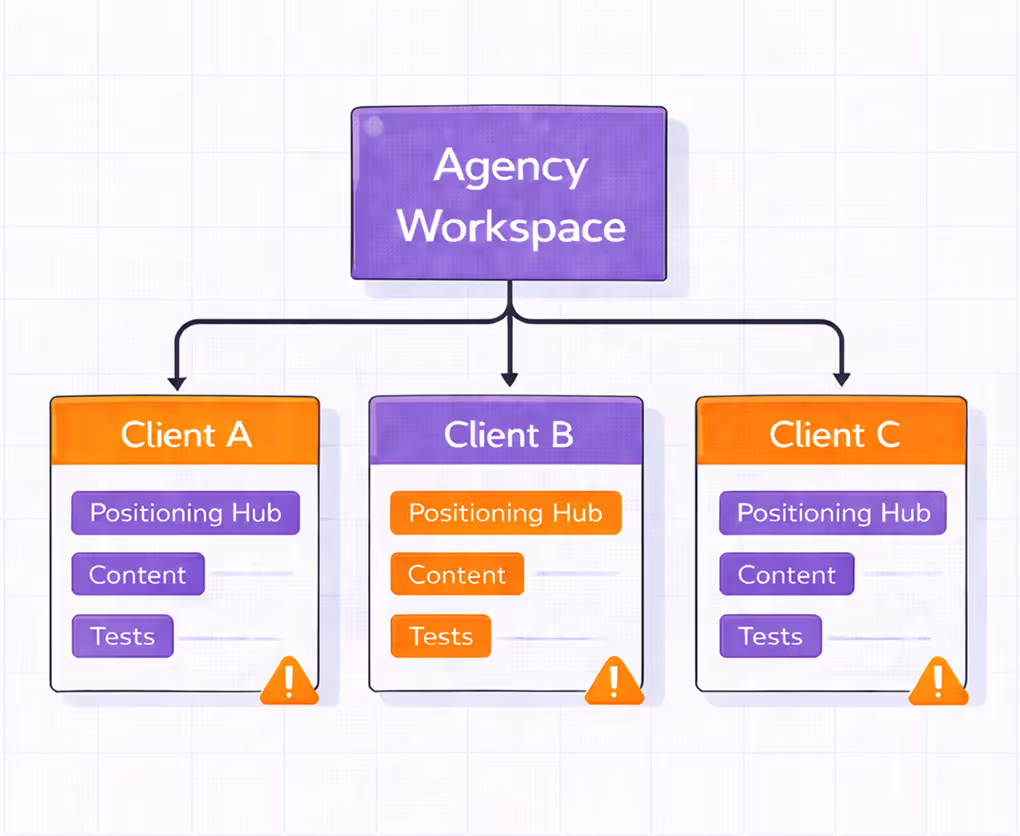
MessageWorks supports agencies by creating dedicated Positioning Hubs per client, turning one-off strategy decks into a living, governed positioning system you can reuse across briefs and deliverables. This “Unified Positioning OS” approach matters because it keeps each client’s segment-, persona-, and value-prop language consistent as teams and freelancers contribute. The primary outcome is faster, more reliable on-brief execution without reinventing the story for every request.
MessageWorks keeps teams aligned by making approved messaging discoverable and reusable in a governed positioning system - so writers, strategists, and account teams start from the same canonical language instead of old decks and Slack threads. This matters for agencies because “off-brief” work and rewrites erode margins and slow delivery. The primary outcome is fewer revision cycles and more consistent client messaging across web, email, and social assets.
Yes - MessageWorks’ AI-Powered Content Generation produces channel-ready drafts (web, email, LinkedIn, etc.) that are grounded in your Unified Positioning OS: segment/persona narratives, value propositions, objections, and proof points. This matters because non-experts and distributed teams typically generate fast but off-strategy copy that senior PMMs or strategists must rewrite.
MessageWorks helps agencies match client voice by tying AI generation to each client’s dedicated positioning system - where the client’s canonical messaging, constraints, and on-brief guidance live - so drafts start aligned instead of needing heavy rewrites. This matters because agencies juggle multiple brands and contributors, and generic AI output can sound polished but still feel off-voice or off-strategy. The primary outcome is more consistent, client-specific drafts that creative teams can refine quickly.
Yes - MessageWorks is designed to support the objective of translating product capabilities into aligned, persona-specific value propositions. Using the Positioning Intelligence Hub as a governed “Unified Positioning OS,” teams can structure how capabilities roll up into role- and persona-specific outcomes, benefits, and proof points so product, marketing, demand gen, and sales start from the same canonical story and avoid drift.
Synthetic Audiences in MessageWorks are a way to predict how a defined buyer segment or persona is likely to respond to a message—by using large language models as expert forecasters of audience response, not as role-playing “pretend buyers.” Instead of producing a single opinion, Synthetic Audiences model distributions of reactions across a realistic audience, preserving disagreement, confusion, and partial resonance. They exist to give teams structured, repeatable, persona-grounded insight before messages reach real customers, where waiting for post-launch data is slow or impractical.
MessageWorks supports pre-launch message testing through Content Testing with AI-Generated Synthetic Focus Groups, aligning directly to the objective of de-risking and optimizing content before it reaches real audiences. Draft assets can be evaluated against your canonical messaging architecture in the Positioning Intelligence Hub and then stress-tested with synthetic persona reactions, producing prioritized recommendations to improve clarity, relevance, and persuasiveness before launch decisions are locked.
Because MessageWorks combines a Unified Positioning OS, On-Brand Content at Scale, and Evidence-Led Message Optimization in one system, ROI is typically framed as fewer rewrites and review cycles, faster launch/campaign execution, and less reliance on one-off consultant artifacts or slow research. It matters because it supports a clearer decision on “what we say, to whom, and why,” while improving confidence before high-stakes messaging goes live.
The system’s Content Testing with AI-Generated Synthetic Focus Groups is designed to replace opinion-driven feedback with structured, persona-grounded critique and prioritized edit recommendations - aimed at reducing subjective back-and-forth in client reviews. That matters for agencies because it supports clearer “why this works” justification and faster iteration before launch, rather than relying on gut feel or late-stage fixes.
Generic AI copy tools treat each draft as an isolated prompt, which often leads to inconsistent, “me-too” output when teams can’t provide full strategic context. This system is built around a Unified Positioning OS (via the Positioning Intelligence Hub) that encodes segment/persona value propositions and then powers AI-Powered Content Generation and Synthetic Focus Groups from the same governed source - so drafts can be generated and stress-tested against the official narrative.
Use the agency motion implied in the inputs: run Positioning Discovery to capture a client’s narrative, store it in a dedicated Positioning Intelligence Hub, then deliver On-Brand Content at Scale plus Evidence-Led Message Optimization using synthetic audiences. This matters because it turns “smart strategy + smart copy” into repeatable IP that is easier to onboard writers to and easier to defend in reviews with structured critique before launch.
The inputs describe a Multi-client Agency Workspace with dedicated Positioning Hubs per client, which implies keeping each client’s positioning system separate and governable for agency delivery. That matters because agencies need a repeatable way to operationalize client narratives without cross-client confusion, while supporting controlled collaboration as teams and freelancers contribute to on-brief work.
See how MessageWorks gives agencies a per-client positioning hub, on-message AI generation, and pre-launch resonance evidence. Three productized service lines that defend every retainer.

.svg)
