• Vision

A shared story at the heart of every company

Our vision for how B2B teams communicate with the world

We imagine a world where every B2B company has a clear, living story at its center—and every message, from anyone on the team, flows from that shared source of truth.

In that world, positioning isn’t trapped in decks, docs, and tribal knowledge. It lives in a central brain that understands your market, your buyers, and the value you create. Marketing, sales, and leadership all plug into the same story, so the company shows up to customers as one coherent, confident voice.

MessageWorks exists to help create that world. Over the next several years, everything we build is in service of this idea: one shared story, expressed intelligently everywhere your buyers encounter you.

B2B go-to-market is smarter than ever — and somehow still chaotic

Modern B2B teams are doing more than ever: more products, more personas, more channels, more regions, and an always-on firehose of content. But the story that’s supposed to hold all of that together is usually scattered.
Positioning lives in slide decks, Google Docs, Notion pages, and people’s heads. Generic AI tools sit on top of that chaos, generating even more copy that may or may not line up with what product marketing actually intended.
The result? Marketing and sales are constantly translating, reinterpreting, and improvising the story. Buyers experience a fragmented company: one promise on the homepage, a different angle in an ad, and yet another narrative when they talk to a rep.
We don’t think that’s inevitable. We think it’s a systems problem—and it can be fixed at the level of how a company’s story is created, shared, and learned from.

One living brain for how your company talks to the world

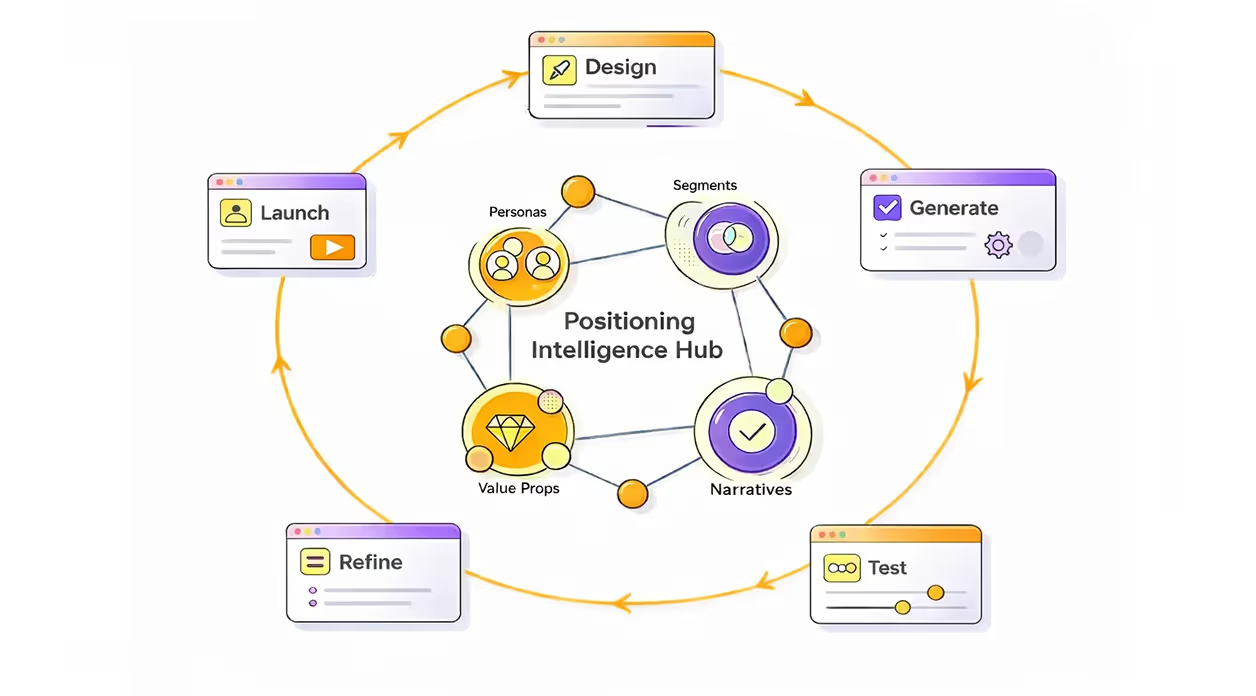
Our vision is a world where every B2B company has a Positioning Intelligence Hub at its center—a structured, living model of your segments, personas, jobs-to-be-done, value props, and proof points. It’s the shared brain your entire go-to-market motion plugs into.
In this world, teams don’t start from a blank page. They design, generate, and refine messages from that central hub, so every new asset is grounded in the same story. Instead of “ask an AI to sound like a CMO,” companies bring a realistic version of their audience to them through Synthetic Audiences that simulate how real buyers think, react, and push back.
The loop becomes simple and powerful:
Codify your positioning in the hub
Generate on-story content from it
Pressure-test it with synthetic audiences
Refine based on what resonates
Then invest real budget and reputation
Over time, this shared brain turns go-to-market from a set of disconnected activities into a coherent system that learns. Every message sent makes the next one smarter.

Every touchpoint feels like the same confident conversation

In the world we want to create, buyers don’t experience a jumble of disconnected messages—they experience one coherent story, told through many moments.
Marketing uses the shared brain to shape campaigns, web copy, and content that are tuned to real personas, then tested before they go live. Sales taps into that same understanding before a call or email:
“You’re meeting a VP of Operations at a mid-market SaaS company. Here are the two jobs they care most about, the proof points that resonate, and the narrative that works when procurement shows up.”
A Sales Messaging Consistency Assistant sits quietly inside inboxes and workflows, nudging reps toward on-message, persona-aware language without flattening their own voice. From the homepage headline to the outbound sequence to the sales deck, everything feels like it came from one thoughtful, aligned mind.
This isn’t about replacing humans. It’s about giving PMMs, marketers, and sellers a shared foundation—so they can spend less time wrestling the story into shape and more time having meaningful conversations with buyers.

A long-term vision, built through real day-to-day work

Our vision is big, but our approach is grounded. We study how product marketers, demand gen leaders, and sellers actually work today—where they copy-paste from, where reviews get painful, where great ideas die because no one has time to operationalize them.
We listen closely to what teams say they want, and we also read between the lines. No one wakes up asking for “a positioning operating system with synthetic audiences.” They ask for fewer rewrites, fewer off-message campaigns, fewer deals lost because the story didn’t land. We use those raw problems to design tools they might never have thought to request—and then we ship, learn, and iterate quickly.
The future we’re building toward is simple to say and ambitious to realize:

a shared story at the heart of every company, expressed intelligently in every moment that matters.
If we do our job well, “positioning” stops being a fragile document and becomes an everyday advantage—for every marketer, every seller, and every buyer they serve.